UTI Specialist in Mohali
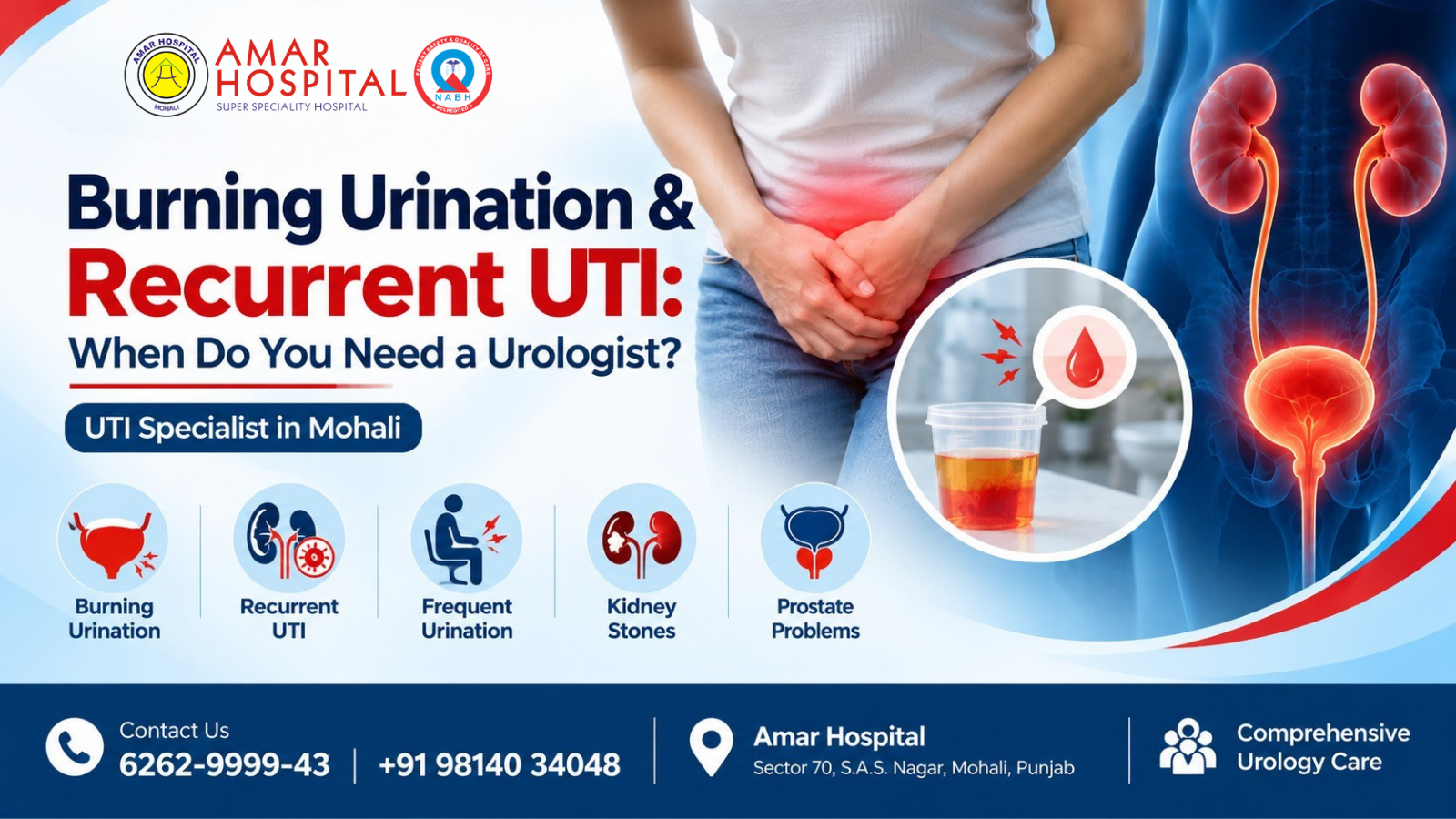
Burning or pain during urination can be uncomfortable and may interfere with everyday activities. Sometimes, it is caused by a urinary tract infection (UTI), while in other cases, it may be linked to kidney stones, prostate problems, irritation or other urinary conditions. When symptoms keep returning or do not improve, understanding the cause is important.
A urinary tract infection can affect different parts of the urinary system, including the urethra, bladder and kidneys. Recognising the symptoms and seeking appropriate medical assessment can help identify the problem and guide suitable treatment.

What Is a Urinary Tract Infection (UTI)?
A urinary tract infection usually develops when bacteria enter the urinary tract and multiply. Most uncomplicated UTIs affect the bladder, although an infection can sometimes spread to the kidneys.
Common symptoms include:
👉🏻Burning or stinging while passing urine.
👉🏻A frequent or urgent need to urinate.
👉🏻Passing small amounts of urine repeatedly.
👉🏻Discomfort or pressure in the lower abdomen.
👉🏻Cloudy urine or urine with an unusual smell.
👉🏻Blood in the urine in some cases.
These symptoms do not always confirm a UTI. Similar problems can occur with other conditions, so an appropriate medical assessment is important.
What Is a Recurrent UTI?
A recurrent UTI refers to repeated urinary tract infections. A commonly used definition is two or more infections within six months, or three or more within a year.
Repeated symptoms may occur because an earlier infection has not fully resolved, a new infection develops, or an underlying condition makes infections more likely. Risk factors can include difficulty emptying the bladder, urinary stones, an enlarged prostate, diabetes, catheter use and certain changes associated with menopause.
If burning urination repeatedly returns after treatment, it is better to investigate the reason instead of repeatedly taking medication without medical advice.
When Should You Consult a Urologist?
A urologist evaluates conditions affecting the urinary tract and, in men, the prostate and other parts of the reproductive system. Consultation may be appropriate in the following situations.
1. Burning urination keeps returning
Repeated episodes of painful urination deserve attention, especially when symptoms return soon after treatment. A clinician may recommend urine testing to determine whether infection is present and whether further investigation is needed.
2. UTI symptoms do not improve
Symptoms that persist or worsen despite prescribed treatment require reassessment. The bacteria may be resistant to the medicine, the diagnosis may need review, or another condition may be responsible.
3. You notice blood in your urine
Blood in the urine can occur with a UTI, but it may also be associated with kidney or bladder stones and other urinary tract conditions. Visible blood should be medically assessed, even when there is no pain.
4. You have difficulty emptying your bladder
A weak urine stream, difficulty starting urination, dribbling or a feeling that the bladder remains full may indicate a problem with urine flow. In men, an enlarged prostate is one possible cause. Urinary blockage can also increase the risk of infection.
5. You experience repeated UTIs alongside other urinary problems
Recurring infections with flank pain, suspected stones, persistent urinary symptoms or other complications may require a more detailed urological assessment. People searching for a UTI specialist in Mohali should understand that the appropriate evaluation depends on their symptoms, medical history and test results.
When Is Medical Attention Urgent?
Seek prompt medical care if urinary symptoms occur with fever, chills, pain in the back or side, nausea or vomiting. These symptoms can indicate a kidney infection, which may need urgent treatment.
Other warning signs include severe pain, visible blood with clots, or an inability to pass urine. During pregnancy, suspected UTI symptoms should be discussed with a healthcare professional promptly because complications require particular attention.
Do not delay care if symptoms are severe or rapidly worsening.
How Are Recurrent UTIs Diagnosed?
Assessment usually begins with a review of symptoms, previous infections, medicines and relevant medical history. Depending on the situation, investigations may include:
👉🏻Urine routine examination: Helps identify findings that may indicate infection or inflammation.
👉🏻Urine culture: Can identify the bacteria involved and help guide antibiotic selection.
👉🏻Blood tests: May be recommended when a more significant infection or another medical concern is suspected.
👉🏻Ultrasound or other imaging: May be considered if stones, obstruction or structural problems are suspected.
A urologist may recommend additional tests, such as cystoscopy, for selected patients. Not everyone with a UTI needs imaging or an invasive procedure.
Treatment and Prevention
Treatment depends on the cause. Bacterial UTIs may require prescription antibiotics selected according to clinical findings, previous results, allergies and other individual factors. Other causes of burning urination need different management.
Avoid taking leftover antibiotics, sharing medicines or stopping a prescribed course without professional advice. Unnecessary antibiotic use can contribute to antimicrobial resistance.
Helpful everyday habits include drinking adequate water unless a clinician has advised fluid restriction, avoiding prolonged holding of urine and taking time to empty the bladder fully. Wiping from front to back after using the toilet may also help reduce bacterial spread. People with recurrent infections may benefit from an individual prevention plan based on the underlying cause.
Conclusion
Burning urination should not be ignored when it persists, worsens or repeatedly returns. While many UTIs are treatable, recurrent symptoms may require urine culture, further investigation or assessment by a urologist. Fever, chills, flank pain, vomiting, visible blood in urine or an inability to urinate warrant timely medical attention.